Gulf Faculty Movement, 2026
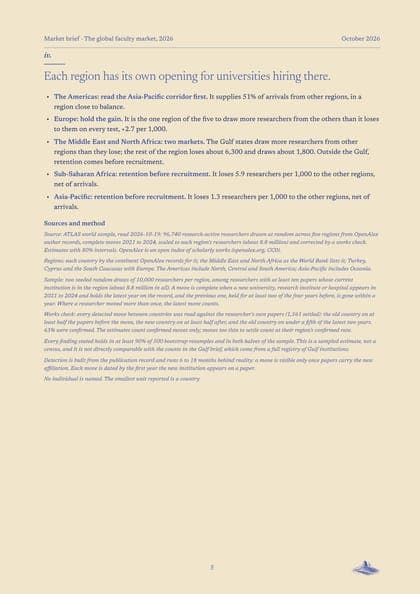
The eastward turn: who is arriving at Gulf universities, from where, in which fields, and where the openings are.
Six Gulf states · 215 institutions · moves detected 2021 to 2026
Where research-active faculty move between five regions, the corridors that carry them, and an opening for universities hiring in each.
Five regions · 8,762,862 researchers · moves detected 2021 to 2026
Key figures
Source: ATLAS world sample, read 19 October 2026, built from OpenAlex author records: 96,740 research-active researchers drawn at random across five regions, complete moves 2021 to 2024, scaled to about 8.8 million researchers and corrected by a works check. Estimates with 80% intervals.
Findings
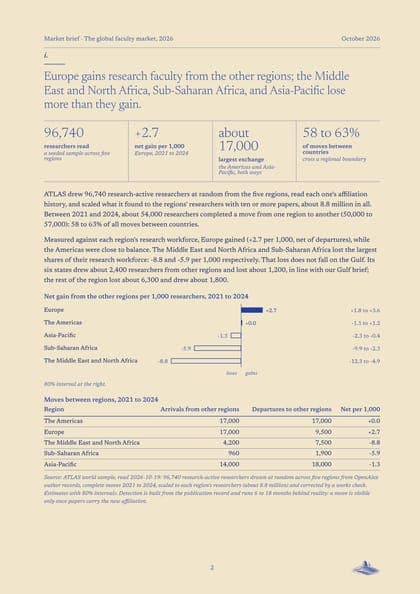
Europe drew more researchers from the other regions than it lost, +2.7 per 1,000 net of departures; the Americas were close to balance.
The Middle East and North Africa and Sub-Saharan Africa lost the largest shares of their research workforce, 8.8 and 5.9 per 1,000. The loss does not fall on the Gulf: its six states drew about 2,400 researchers from other regions and lost about 1,200.
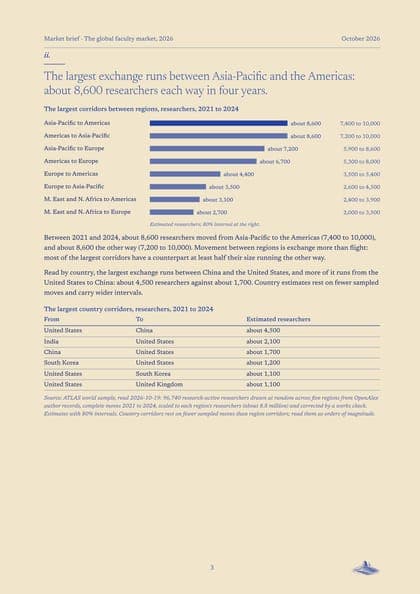
Movement between regions is exchange more than flight: about 8,600 researchers moved from Asia-Pacific to the Americas between 2021 and 2024, and about 8,600 the other way.
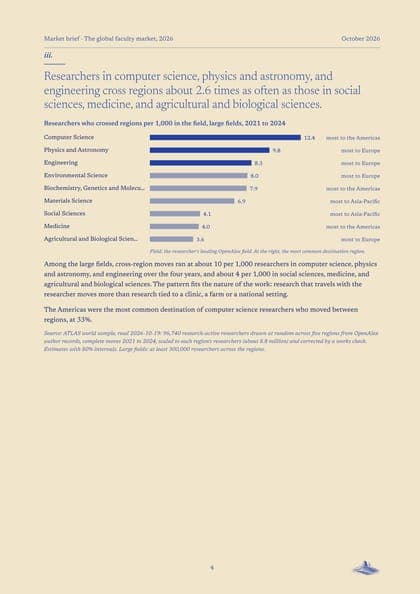
Cross-region moves ran at about 10 per 1,000 researchers in computer science, physics and astronomy, and engineering, and about 4 per 1,000 in social sciences, medicine, and agricultural and biological sciences.
Inside the brief
Europe gains research faculty from the other regions; the Middle East and North Africa, Sub-Saharan Africa, and Asia-Pacific lose more than they gain.
The largest exchange runs between Asia-Pacific and the Americas: about 8,600 researchers each way in four years.
Researchers in computer science, physics and astronomy, and engineering cross regions about 2.6 times as often as those in social sciences, medicine, and agricultural and biological sciences.
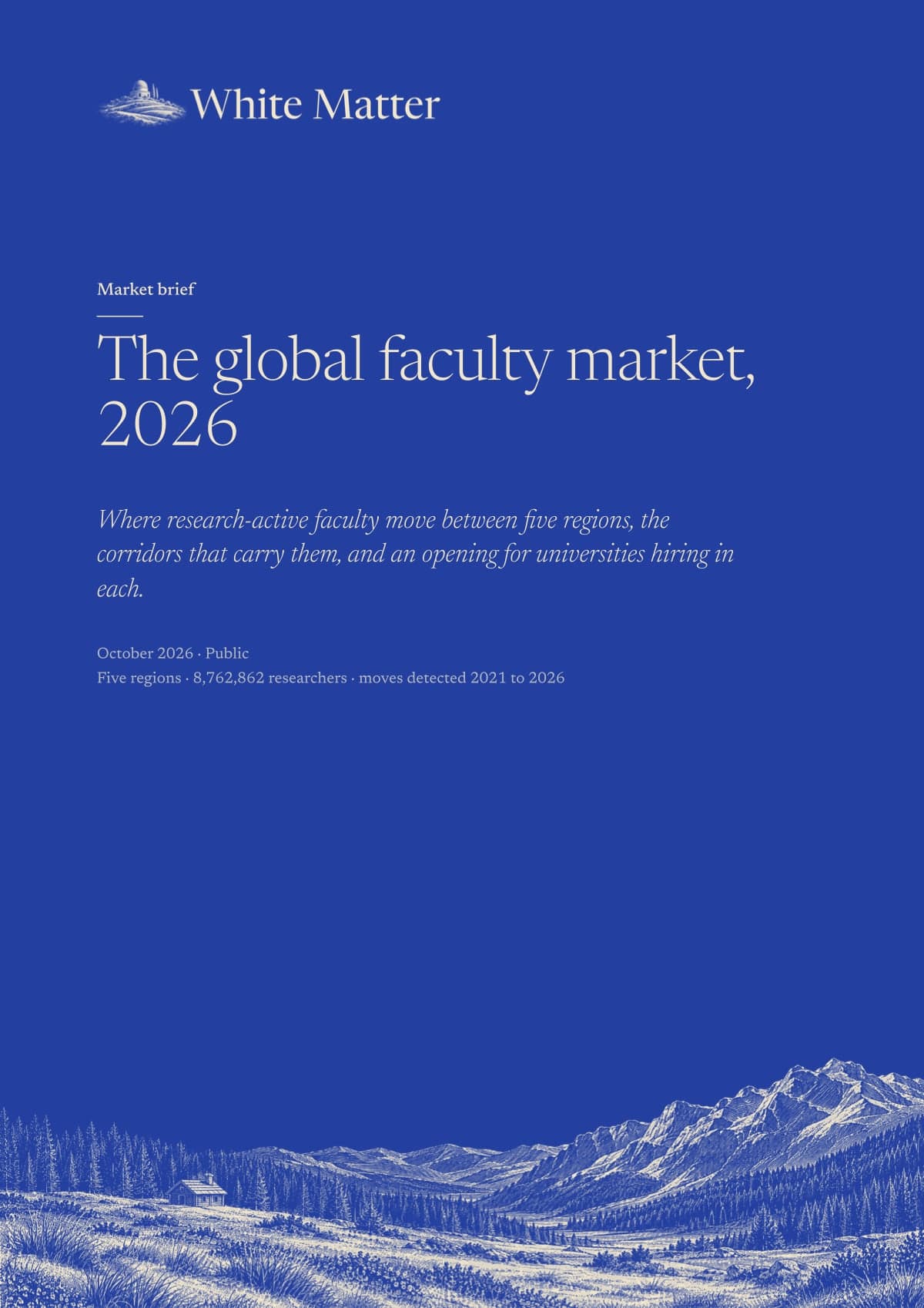
Each region has its own opening for universities hiring there.
Read the full brief, with every chart, table, source, and method note.
The eastward turn: who is arriving at Gulf universities, from where, in which fields, and where the openings are.
Six Gulf states · 215 institutions · moves detected 2021 to 2026
About half of arrivals raise their institution's research average. Their record before the move shows which half.
Confirmed arrivals at Gulf institutions · moves complete by 2023 · outcomes through 2025