The Global Faculty Market, 2026
Where research-active faculty move between five regions, the corridors that carry them, and an opening for universities hiring in each.
Five regions · 8,762,862 researchers · moves detected 2021 to 2026
About half of arrivals raise their institution's research average. Their record before the move shows which half.
Confirmed arrivals at Gulf institutions · moves complete by 2023 · outcomes through 2025
Key figures
Source: ATLAS movement registry and ATLAS institution records, read 18 October 2026, built from OpenAlex works. Complete moves, grades A and B.
Findings
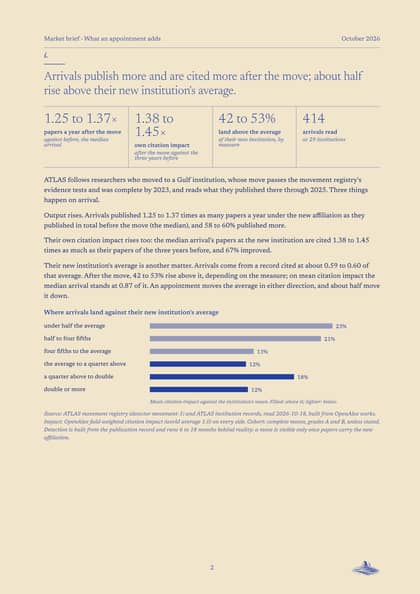
Arrivals publish more and are cited more after the move; about half rise above their new institution's average.
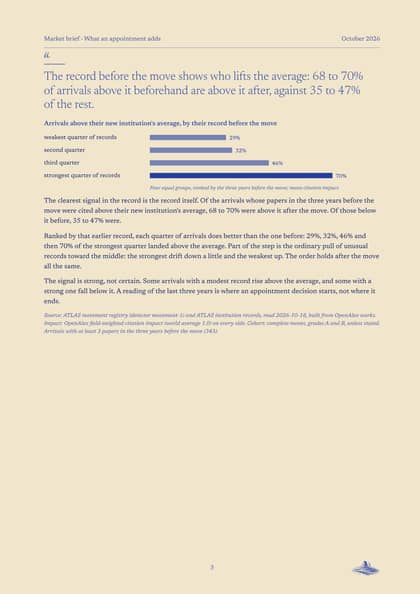
The record before the move is the clearest signal: 68 to 70% of arrivals above the average beforehand are above it after, against 35 to 47% of the rest.
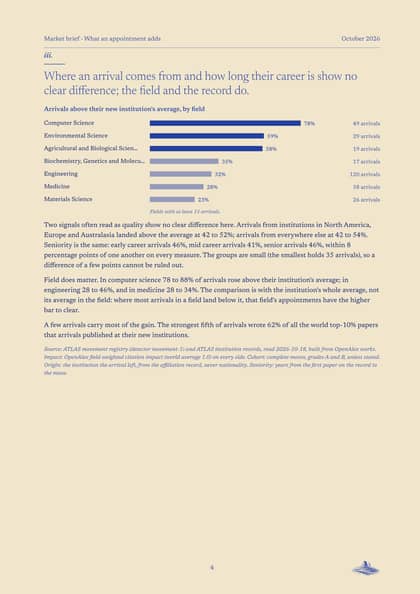
Where an arrival comes from and how long their career is show no clear difference; the field and the record do.
A few arrivals carry most of the gain: the strongest fifth wrote 62% of the arrivals' world top-10% papers.
Inside the brief
Arrivals publish more and are cited more after the move; about half rise above their new institution's average.
The record before the move shows who lifts the average.
Where an arrival comes from and how long their career is show no clear difference; the field and the record do.
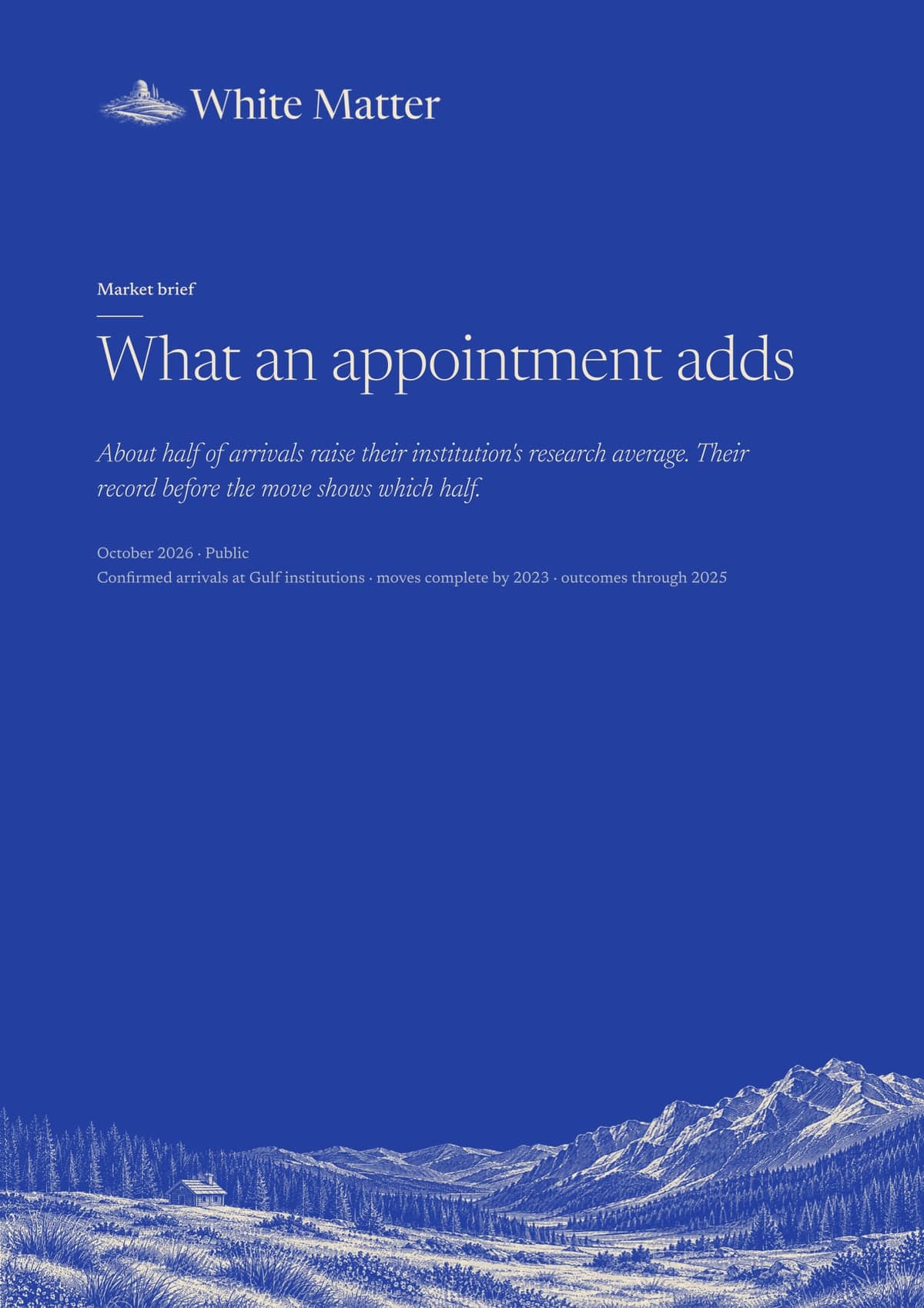
The record points to five practices for appointments in the Gulf.
Read the full brief, with every chart, table, source, and method note.
Where research-active faculty move between five regions, the corridors that carry them, and an opening for universities hiring in each.
Five regions · 8,762,862 researchers · moves detected 2021 to 2026
The eastward turn: who is arriving at Gulf universities, from where, in which fields, and where the openings are.
Six Gulf states · 215 institutions · moves detected 2021 to 2026